Showing posts with label Peter Bogdanovich. Show all posts

BEST ACTOR OSCAR-WINNER Jeff Bridges: The Hollywood Flashback Interview

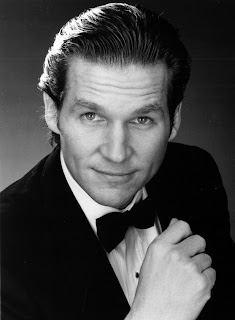
2010 Best Actor Academy Award-winner Jeff Bridges.

Editor’s Note: Congratulations to Jeff Bridges for finally getting his props with last night's win for "Crazy Heart"! He's now officially lost the title of "Most Underrated Actor of His Generation." In the spirit of Jeff's victory, we at The Interview thought it appropriate to share this article, which originally appeared in the July 1999 issue of Venice Magazine. Enjoy, and well-done, Jeff!

BUILDING BRIDGES
By
Alex Simon


Jeff Bridges is arguably the most underrated great American actor since the late Robert Ryan. A performer of incredible range, whose myriad of characterizations over the past 30 years leave the filmgoer with a continued sense of awe and admiration, Bridges' refusal to fit a mold on-screen might be the very thing that has kept him from becoming a conventional movie star. It's also the thing that has kept his work so fascinating, and so brilliant.

Born into a show business family as the second son of the late Lloyd Bridges and his wife Dorothy, Jeff came into the world December 4, 1949 in Los Angeles and made his first screen appearance at the age of four months, playing the infant in Jane Greer's arms in The Company She Keeps (1950). Bridges appeared on TV's "Sea Hunt" with his father eight years later and was an occasional performer, with older brother Beau, on "The Lloyd Bridges Show" in 1962.

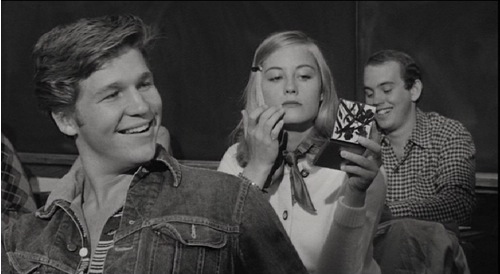
After a stint in the Coast Guard Reserve and drama studies at New York's Herbert Berghof Studio, Jeff made his adult film debut in Halls of Anger, a B picture about student unrest, in 1970. This was followed by the unseen The Yin and Yang of Mr. Go (1970). Having paid his dues with two minor films, Jeff hit pay dirt with the classic The Last Picture Show (1971), portraying Duane, the town football hero and love of local bad girl Cybill Shepherd in Peter Bogdonavich's portrait of a small Texas town in the early 1950's. Bridges was nominated for an Academy Award as Best Supporting Actor for his breakthrough role, and he hasn't stopped working since. Other film highlights include John Huston's Fat City (1972), Robert Benton's Bad Company (1972), The Last American Hero and John Frankenheimer's film of Eugene O'Neil's The Iceman Cometh (both 1973). The Clint Eastwood actioner Thunderbolt and Lightfoot (1974, Jeff's second Oscar nomination for Best Supporting Actor), Rancho Deluxe (1975), Bob Rafelson's Stay Hungry (1976), Heaven's Gate (1980), Cutter's Way (1981), Tron (1982), Against All Odds (1984) and John Carpenter's Starman (also 1984, nominated for Best Actor), Jagged Edge (1985), Francis Ford Coppola's Tucker (1988), The Fabulous Baker Boys (1989), The Fisher King (1991), American Heart (1993), Peter Weir's Fearless (1993), and the Coen Brothers' comedy The Big Lebowski (1998). Jeff's production company, Asis Productions, produced the Showtime movie "Hidden In America" (1996), starring brother Beau, which dealt with hunger in America, a subject close to Jeff's heart. The film received a Golden Globe nomination in 1996 for Best TV/Cable Film and earned a Screen Actor's Guild award for Beau as Best Actor. Jeff, who moved his family to Santa Barbara after the '94 Northridge earthquake ("It turned out we had our own private fault line around the old house"), is also a gifted musician, and is putting the finishing touches on his first CD (backed by David Crosby and Michael McDonald), as well as being a prolific photographer. An exhibit of his photos is currently on display at the Museum of Contemporary Photography in Santa Monica.

The prolific Mr. Bridges has two new films on deck this summer: the home-grown terrorism thriller Arlington Road in which he co-stars with Tim Robbins and Joan Cusak, and Albert Brooks' scathing new comedy The Muse, co-starring Brooks, Sharon Stone and Andie MacDowell. Both films hit screens in July.

One would assume, based on his numerous portrayals of good guys, that Jeff Bridges would be a good guy in person. In fact, Jeff is so cool, laid-back and unassuming, that a bite to eat with him after a photo session feels like a friendly lunch with your next door neighbor or old college buddy. After a few bites of pasta, you forget you're talking to one of the world's great actors and almost want to ask him if he'd like to fire up a stogie and watch the playoffs on the big screen while you polish off the last of your old man's imported beer. We didn't, but it was tempting...

Arlington Road reminded me of the great paranoid thrillers of the 70's, like The Parallax View (1974).
Jeff Bridges: Yeah, I responded really strongly to the script right away when I read it. It was one of those situations where the writer was always ahead of you. The twists and turns were amazing. I read it completely cold, didn't know anything about it. It was a wonderful read just for that reason. Also, I knew Tim Robbins was involved and I had always admired his work, and knew this would be an opportunity to work with him, although when I read it, we weren't sure who was going to play what part. Tim's wonderful to work with. He's a really generous actor.

Your character was sort of a classic Hitchcock everyman thrown into an extraordinary situation.
Yeah, it had a lot of Hitchcockian elements, which I also liked. (Director) Mark Pellington was another reason I wanted to be involved. I met with him and saw a wonderful documentary he did on his father. The way he shot it was a real plus.

With your character in The Muse, you couldn't have two more different guys. Did you base your character of the wildly successful screenwriter on anyone?
(laughs) I was told that he was based on Jim Brooks (Terms of Endearment, As Good As It Gets), who is a good friend of Albert's. I've never met Jim Brooks, but this character was great fun, and I'm a big fan of Albert's. I loved Lost In America (1985), and a lot of his other films. People wonder how Hollywood works, and it's true that people in this town are always looking for that "special thing." I think the idea that there's this muse, feeding the writer ideas and inspiration is a wonderful one. And maybe it's true...(laughs)

Were you drawn to acting from an early age? When you were hanging out on the "Sea Hunt" set, did you know that this is what you wanted to do?
Not really. I was carried on-screen when I was six months old by Jane Greer, then worked with her again in Against All Odds, 30 some-odd years later. The scene where she carried me on, I had to be crying. And I was a real happy baby, so my mother instructed Jane to just pinch me to make me cry. So 30 years later, in Against All Odds, I went up to Jane before a really emotional scene and said "Could you just give me a little pinch?" (laughs)

Did it work a second time?
Yeah, it did. She's a wonderful actress, Jane Greer. She was in the film that Against All Odds is based on (Out of the Past, 1947), and her performance was so wonderful, so understated, especially for the times. It was a particularly bizarre shoot for us, though. Remember that Rachel Ward and I had some pretty torrid love scenes? All that stuff in Mexico was shot while she was on her honeymoon! (groans and laughs) Luckily her husband, Bryan Brown, is also a wonderful actor, and a very understanding one!

How do you wife and kids react when you have to do a torrid love scene on film?
I think it probably makes them feel uncomfortable more when people ask them about it, and how they feel. My wife is very supportive. I almost feel like she should get a credit up on the screen along with me. But you were asking about when I decided to act...I had done quite a few pictures before I finally decided to act full time. For a long time I had wanted to get into music...actually all my music is kind of resurfacing now. One of the great things about living up in Santa Barbara is that there are so many great musicians up there. So, I'm making an album. I've started a record label and am releasing it myself. It's a mix of rock, jazz, some reggae-type stuff. Three songs were written by a wonderful songwriter named John Goodwin, who's my oldest friend. We grew up together. Michael McDonald and David Crosby are my backup singers! (laughs)

Not too shabby.
No. We've been having a great time. So after thirty-five years of writing songs, it's finally come around. I play piano and guitar in the band.

Didn't your dad do some musical theater?
Yeah, he replaced Richard Kiley in Man of La Mancha and did Sky Masterson in Guys and Dolls. He used to love to sing.

He also was a wonderful Shakespearian actor, right? He must've found it frustrating, always getting cast as action heroes.
Yeah, he loved doing Shakespeare. But he pulled off "Sea Hunt" so well, people actually thought he was a real diver, that he was Mike Nelson! So he was typecast as that. Years later, when I was doing Blown Away, there was this part of my uncle. So I talked the producers, and said, 'I know this really terrific actor named Lloyd Bridges who'd be perfect for this.' And they thought about it and said "Yeah but, isn't he really more of a comedic actor, like in Airplane?'"He pulled that off so well, spoofing himself, that finally that's how he was typecast.

Let's go back to how you decided to stick with acting.
I remember the moment. It was right after The Last American Hero. Usually after a film, because acting uses a certain emotional muscle, I feel pretty wiped out and don't want to act right away again. Thank God that feeling passes! (laughs) So my agent called me, and said that John Frankenheimer was doing a film of The Iceman Cometh with Robert Ryan, Lee Marvin and Frederic March and wanted me to be in it. I said 'No man, I want to get back to my music. I've got other things I want to do.' A couple hours later, Lamont Johnson, who'd just directed me in The Last American Hero called and just read me the riot act: "You call yourself an actor?! How can you turn down this opportunity to work with these masters of your craft?!" So I decided to do a little experiment on myself to see if I really wanted to make this my full time job. I figured professionals are supposed to do it, even if they don't feel like it. So that's what I'll do. And it turned out to be a really great experience. It was all shot on one set. Usually on a film you might rehearse for a week or two then spent eight or ten weeks shooting. On this, we rehearsed for eight weeks and shot for two weeks. It was all of us sitting around a table, all these great actors. All my scenes were with Robert Ryan, who's a guy who kind of stands alone. He's such an underrated actor. So it was hanging out with all these great actors and learning from them. It was kind of like a play that we could have taken on the road. John Frankenheimer did such a masterful job of shooting it, keeping the camera moving. The cameras used these huge magazines that could do ten minute takes...I'm not that knocked out by my performance, looking back (laughs). But it was great working with all those guys, and working with them made me realize that this is what I wanted to do.

Let's start with The Last Picture Show. Apparently there was as much drama going on behind the cameras as in front.
It was a great experience. I was 19 or 20 years old, getting to do kissing scenes with Cybill Shepherd...

That must've been tough.
(laughs) Oh yeah, it was. Everyone was in love with her. Peter (Bogdanovich) was so wonderful. The cinematographer, Robert Surtees, was incredible. He was a true master. The whole cast was great. I always felt that Tim Bottoms never got enough acclaim for his work in that picture. He's a wonderful actor. My favorite scene in that movie is the last scene between he and Cloris in her kitchen...Peter had such courage as a director to let the silence in the scenes just hang there. It was amazing. We had a great time going back 20 years later to do Texasville (1990), which was also written by Larry McMurtry. It was just like we'd had a long weekend, and then came back to work...Larry McMurtry just wrote a new book, the third installment, called "Duane's Despressed." (laughs)

He's turning into John Updike. Your character is like Rabbit.
That's right! (laughs) I'm looking forward to reading the book, hoping that down the line we can all get together and do it again, although Texasville didn't do that well, so it might be kind of tough. Peter's original idea for Texasville was to have it on a double bill with The Last Picture Show, which would have been interesting, but that never happened.

Tell us about working with John Huston.
I'm flooded with so many memories...the first thing I remember is the interview. I think Beau got me that gig. Huston thought he was too old for the part, so Beau said 'Why don't you check out my younger brother?' So I had the interview in Madrid, Spain. The night that I landed, I met this girl in the lobby and she took me out on the town and we ate all this great seafood, drank and really had a ball. The next morning I was feeling rather peculiar. All of the sudden when I got to the interview, it turned out that I was really sick. It turned out that I had food poisoning, from the shellfish. The interview was at this museum. John showed me all this fine art while I was vomiting with my mouth closed and swallowing it, trying to maintain! (laughs) He didn't notice at all, just kept showing me all his favorite paintings! I went back to the hotel and was so weak, I couldn't pick up the phone to call for help. Who saved my life, but James Mason, who was staying at the hotel and with whom I'd done a rather obscure picture called The Yin and Yang of Mr. Go, which was directed by Burgess Meredith. Funny story about that: James played a Chinese Mexican in the film...the money fell through and we finally all had to leave Hong Kong and come home. Fifteen years later, I'm flipping through a film catalogue and there's the film! I called Burgess and we had a screening. It was the saddest, funniest thing I've ever been involved in. All the scenes that we left out, they made cartoons out of! (laughs) Then they invented another character played by Broderick Crawford and just spliced him in! (imitating Crawford) "Yeah, I saw him over there, over at Sally's!" Then they'd have a cartoon of me and James Mason...we were laughing and crying at the same time, because this was Burgess' baby.

Let's talk about your photography.
I've been taking pictures for years now, usually on the sets of my movies and at the end of the shoots, I make up books of the pictures and give them to everyone as souvenirs. I've been using a Widelux camera, which is a panoramic camera, sort of what a letterboxed film looks like on video or DVD. I'm putting together a coffetable book of pictures which should be available in a year or so. I'm also getting into the web a little bit, and have a website up (http://www.jeffbridges.com/) if people are interested in what's cooking with either one of those things. It's funny, because I'm not a computer guy at all. I was sucked into a computer in Tron once, but that's another story. (laughs)

Tell us about working with Clint Eastwood on Thunderbolt and Lightfoot.
Well, it was Michael (The Deer Hunter, 1978 Best Picture) Cimino's first film. Clint produced it, and was giving Michael a directorial shot after he'd written Magnum Force (with John Milius) for Clint before that. It was the first film I did up in Montana, and I fell in love with that state. Later, I bought some property and built a house up there. It was a great experience. Clint likes doing very few takes, one, maybe two at most, whereas Michael likes to do a lot, but couldn't since Clint was the producer. So there was one scene where I wasn't happy with the way it was going, and we'd already done a couple takes. So I went to Michael, and said I wanted to do it again. Everyone got really nervous, including Michael, who said "I don't know man, I'm gonna have to ask the boss," meaning Clint. So this hush sort of falls over the set when Clint comes back. He looks around, looks at me, looks at Michael and says "Give the kid another try." (laughs)

How different was Cimino on Heaven's Gate? Did it feel like a disaster?
No, not at all, and I still think it's a terrific film. Michael was very hot off The Deer Hunter, which had won all these awards, so he pretty much had free reign to do as he pleased. He'd shoot dozens of takes, sometimes 50 or 60. The problem with that is, you never know on which take you really have to be "on" as an actor and it sort of threw a lot of us out of synch. The other thing I remember was during the big shoot-out at the end, we all had to ride in a circle, half going one way and half the other. Now most of these guys playing cowboys were real Montana cowboys. And Michael must've had us do two dozen takes of riding around in circles--right at each other! I remember right before every take just going 'Please God, let me live through this one!" (laugh) One of the saddest memories I have making films is going to the premiere of the film in New York and the reviews the next morning. And that terrible sound of a smattering of applause at the end. I notice that every time I've seen the film, I enjoy it more. I think that might be a function of starting to relax into the film's pace, knowing what I'm in store for. I think it's very American, especially nowadays, to be used to seeing cut, cut, cut up on the screen. Even if you're not realizing what's making you uncomfortable, that's what it probably is...a big part of how much a person enjoys a film is what they know about it going in, either from the trailer, the ad in the newspaper or the reviews. And with Heaven's Gate, the reviews were so terrible! Talk about preparation going to see a film! And the reviews were so personal. One review said "If they shaved Michael Cimino's head, they'd find three 6's." I mean, what the fuck is that?! It'll be interesting to see, 10 or 20 years from now, how that film is received. On a positive note, Cimino gave me the whorehouse and that barn on that huge ranch at the end of the shoot, and that's now my house in Montana. The barn's my studio.

Winter Kills is a really crazy, interesting movie.
Yeah...boy. That was another first-time director, Bill Richert. It was all kind of a fictitious version of what happened with the Kennedy clan, sort of crossed similar territory that Oliver Stone's movie did ten years later, in a sort of weird way. That was an interesting film because, here's this young director, who was so charismatic...do you remember the cast he assembled? John Huston, Elizabeth Taylor, Toshiro Mifune, Sterling Hayden, Thomas Milian, Jack Elam, Belinda Bauer, Richard Boone...just a wild, wild cast! He got all these people just out of his sheer excitement about the project. It was interesting on a lot of levels. I had a chance to work with John Huston as an actor as opposed to a director, which was quite different. During Fat City he kind of kept me on my heels. He and Stacy Keach, who did the lead, were very close, but he kept me on my heels, saying things like (as Huston) "We've scheduled some fights for you, Jeff. We're going to turn you pro..." I was so in awe of him. During Winter Kills it was just the opposite. We sort of hung out and you always got the feeling that he was giving the actors lessons in how to work with a director. He was so deferential to Bill Richert, who'd never directed a film before. He was really wonderful. I feel so blessed to have worked with him on both those films. I keep waiting for an opportunity to work with Angelica now, I love her work so much.

Beau starred in Hal Ashby's first movie (The Landlord, 1970) and you starred in his last (8 Million Ways to Die, 1986). Tell us about Hal Ashby.
He was really one of my favorite directors I've ever worked with, a real master, and such "art balls." He would have such faith in the actors and himself and the whole process, that he would be so relaxed that it would seem to an outside person that he was unprepared. It was really just this faith in the artistic process. You just have to look at his work to see it. One of the sad, and tragic things about 8 Million Ways to Die, was the producer had hired this brilliant director who presented the script to me. I said 'Why does Hal want to do this? It seems like kind of a cop, shoot-em up picture.' Hal said "No, no. I want to get into the character's obsession with alcohol, and a whole different thing. I don't really know why I want to do it, which is maybe why I want to do it. The only way I'm going to figure out why is to get inside and examine it." I was eager to work with him, so I got in there. The way he worked, I can understand why the money guys would get frustrated. He would throw out a lot of the script and do a lot of improvisation. Coming from being an editor, which is another great place for a director to come from, he would draw on that skill. I remember him saying the secret to being a great editor is to making yourself so familiar with all the film that you've got, and just sit there and go over, and over every single piece. So the producer was on the set often, had no respect for Hal's process at all. Hal was very smart when one of the producer's guys came to the set to spy on Hal. Hal hired him into his camp to be my technical adviser because he was a recovering alcoholic! He was a wealth of information and most of my speeches were worked out with him...somehow, miraculously, Hal shot the film the way he wanted to shoot it. Then it got down to the last weeks of shooting, with a few days left, and the producer comes down and says "You've got one more day." So Hal, very brilliantly, made us all feel like we had all the time in the world. He let Andy Garcia, whose first film this was, do a bunch of takes for the bit he did on the phone. He wouldn't rush him. He said "Let him discover the scene." And at the end of the day, Hal got everything he needed! Hal was going to take some time off and he gave the film to his editor. The producer came in, fired Hal, came after the negative, then proceeded to cut the entire film against the grain that Hal shot it. Hal was making all these editorial choices in the camera while he was shooting. I remember asking Hal 'Are we going to do much looping in this film?' Hal said "I've never looped a film in my life! I'm an editor. I know how to take a razor blade, shave the emulsion off the film, and splice sound in." I ended up looping about 100 lines after the producer re-cut it. It broke Hal's heart, it really did...We didn't know that he was sick at the time, but he probably was.

Cutter's Way is a very underrated film.
Yeah, I think so, too. Ivan Passer directed it, who's wonderful. We shot it up in Santa Barbara, which is when I really fell in love with it. Ivan was, I don't want to say passive, but he said very little and created this wonderful sort of atmosphere where it could all take place. Jordan Cronenweth shot it beautifully and Jack Nietzsche did a beautiful score done entirely with German women playing champagne glasses. It was amazing. John Heard gave a really remarkable performance. He should have been nominated for an Academy Award.

What was it like acting against a computer in Tron?
It was a mammoth undertaking. It was shot on 70 mm, black and white, then hand-tinted in Korea. At the time it was very innovative, although I think it looks kind of dated now. Wendy Carlos did a great score for it. It was maddening, man. It was a long shoot, four months. I had to go to work every day and put on a dance belt, which is like a jock strap with only one strap--right up your ass! So sitting down or doing any sort of...it was terrible, man. All the sets were black velvet and we were wearing white clothes. After a month in there...I wish they'd explored the love triangle a little more.

How did you approach your characterization in Starman?
I remember going in and reading for John Carpenter. I almost gave myself one of these adjustments that actors give themselves. It was almost like I became a small being inside this huge body and I had to kind of steer it around, you know? I was always trying to "act appropriate," as human as possible. If he was crossing his legs, his legs would be crossed, but his weight wouldn't be quite on them because they weren't being crossed for the same reason that we humans would cross them.

He almost seemed like a baby.
Yeah, and I thought if I could get that initial scene when he's being born, if I could get that together and make that as real as possible, then it would just be a process of him getting more and more human towards the end. I have a dancer friend. One of the things I do to prepare for roles is get a role model, so I'll look through my phone book and find someone who reminds me of the person I'm about to play. So with Starman, I looked through my book for strange friends who I wouldn't be surprised to find out that they were an alien. (laughs) So I came across this guy named Russell Clark who I'd been friends with for years. So I had the studio hire him and we worked for about a week and videoed the work, doing a lot of body work for the birth scene. One of my fond memories of making that film was, I was in my study, reviewing all the tapes I'd made. And I was in there, naked, doing that opening scene of Starman's birth and my wife opened the door, came in, and saw me huddled in the corner, nude. (laughs) She had a very strange expression on her face and very quietly closed the door and left me alone! And also my daughters were small at that time, and I observed how they were in their bodies. I looked at different birds also, that kind of thing.

Who was your role model for your character in Jagged Edge?
I read a book by M. Scott Peck called "People of the Lie." And it was his study of evil people and what evil was all about. It was about selfishness, putting the self above everything else. So that book helped me a lot. As far as people I modeled him after, I really looked into myself, my own dark side for that. I tried to imagine what it would be like to be a sociopath. There's something about that idea that's very attractive to most of us, to do just exactly what you want to do. To just satisfy your own impulses. To me the theme of that character was what that kind of evil costs, because ultimately what we all want is love. To be loved and to express love. Of course when you're that evil and self-concerned, you're the most unloveable that you can be. What you really want, you can't have, because you can't let somebody know who you really are.

On the opposite end of the spectrum from that character was Preston Tucker. He was a really fascinating guy. It was also the first time in a feature film that you got to work with your dad.
That's right. One of the remarkable things about doing that film, was that it was done with the blessing of the entire Tucker clan. I was able to ask them things like 'What was the expression on your father's face during the trial?' So it was really great to have that support from the family. Another interesting thing that happened, about a week into the film I was doing the scene where I get very upset with my crew and I'm trying to get them to finish the car and I was supposed to bang my fist on the bulletin board...the last rehearsal before the take, I hit the thing too hard, and I just felt my hand break. I thought 'Oh shit, I'm gonna be fired now and they're gonna replace me...' I had to go right to the hospital. They put it in a removable cast and I told Francis (Coppola) that I wanted to keep shooting and that I'd try to hide the other hand. So I did the take again, and almost broke my other hand! So for the rest of that film, I had to act with a broken hand, and Preston Tucker was almost Italian with his hand gestures! Plus there were lots of crowd scenes where I had to shake hands with people...it was tough. There's only one scene now where I notice the cast, where I'm spinning around in a chair in an ice cream parlor. But nobody ever noticed it, and I had to use all my willpower not to mention it when I was doing press for the film.

How was it working with your dad on that?
It was wonderful. I'm so glad that Francis hired him. I don't know that you're ever a peer with your father, but...he was my teacher and everything, so we approached the work in a very similar way. He approached the work with so much joy. He loved the process. It was so much fun just pretending with him like that. We'd come up with ideas for each other. We had a wonderful time.

How was it doing Baker Boys with Beau?
That was a dream, both to get to work with Beau, and also with Michelle (Pfeiffer). Steve Kloves, the director, must have written that when he was about 24 years-old. It's one of my favorite films that I've ever done. Another great element of that was the producer, Mark Rosenberg, who was a champion for Steve and held out for him to direct the film.

Was it tough playing someone who was such a shit to his brother? I know you and Beau are very close.
Unfortunately I got a little out of hand during that fight scene. We cut the shit out of ourselves on that chain link fence. During the fight scene, we didn't have a word to say to each other during the scene in case things went too far that would get us to stop. When I'm about to break his fingers, he was saying "No! Stop it! Stop it!" (laughs) I thought he was acting, man! And he wound up having to go to the hospital that night. (laughs) I don't think I broke his fingers, but I sure sprained them badly.

Payback time for little brother?
(laughs) That's right! He used to tease me unmercifully when we were kids.

I think one of your best films is Peter Weir's Fearless.
It was a really remarkable experience working with Peter. He such a wonderful person and a wonderful director. He's very inclusive, really encourages the actors to give as much as they can to the project. I remember one time I found myself being moved to go out and buy myself a lot of art supplies and I found myself pasting all these drawings up on the wall to try to draw what my feelings about the plane crash were. I drew all these crazy, kind of swirling things, then presented them to Peter the next day. He incorporated a lot of them into the film. He's very musical. He loves music so much and would always have music on the set while we were working. He would have a big boom box with tapes that he would play to not only put the actors, but the crew into the mood that he was trying to create. He would also bring the boom box into the screening room when we watched dailies that day, so he would score the dailies! He also assembled a lot of people who had survived plane crashes for us to speak to, and that was very helpful. Also, speaking about role models again, another fella who was very helpful during that was Gary Busey, who's an old buddy of mine. He had read the script and was very moved by it, and wanted to be a part of it because he felt he'd been given a new chance at life after his motorcycle accident. He helped me out a lot.

Was your character of The Dude in The Big Lebowski based on any of the people you grew up with here in L.A.?
Yeah, myself! (laughs) Probably about 50% of The Dude's wardrobe was out of my closet: the jelly shoes, a lot of the t-shirts.

Tell us about your philanthropic work.
I've been involved with an organization called The End Hunger Network for about 20 years now. Originally it started out to be about the issue of world hunger, but over the last 10 years we've shifted our focus to hunger here in the United States because it's gotten so bad. It's hard to imagine that, but the United States ranks last among the top 23 industrialized nations in how it takes care of its poor and its hungry. It's really mind-boggling. You read the paper about how the economy is booming and how many jobs we all have. I keep reading on to find where they mention all the hungry people we have here, and it doesn't say anything about that. So we've shifted our focus here, specifically to children. One out of five of our kids live below the poverty line here in the U.S. and poverty and hungry have a very close relationship. So we're working with other hunger organizations and are in the process of forming a new coalition to bring about political changes. One of the reason it's gotten so bad over the years is that all the programs that were doing such a wonderful job feeding the hungry in our country have had their support systems shot to hell. So we're trying to do a lot of lobbying to inform the public about what's going on. One thing I'm really proud of is a movie called Hidden in America that I produced starring my brother Beau. It was a tough assignment because we didn't want to make a long (public service announcement) about hunger, but a story that generally moved people. Everyone did a wonderful job. Martin Bell and Peter Silverman, who respectively directed and wrote American Heart, directed and wrote Hidden. We're getting Hidden out to 20,000 schools along with a study guide that we've also made to teach kids about this issue. The cure for hunger is all in place. We know how to end it. It's just a matter of getting support for the programs that will put it in place. There's a web site, endhunger.com, that people can go to if they'd like to get involved.

Did you get your social conscience from your parents?
I think so, yeah. My parents have always always viewed themselves as part of the family of man, one big family, and have related to others that way. My father worked with CARE in Africa for a while, which was very inspiring to me. I turned him on to the whole hunger issue and the next week he tells me "Yeah, I'm going to Africa with CARE." (laughs) He was amazing that way.
What's next on your slate?
I'm working on something I'm really excited about called The Contender. It's being directed by a fella named Rod Lurie, who's a former film critic. Most critics, I always found myself thinking 'Well, you didn't like that movie, what can you come up with, hot shot?' you know? (laughs) He came up with a brilliant script. I saw another piece of his that he directed that I was very impressed with, so I'm excited about it. Rod got into the business with the idea that he would become a filmmaker, so he became a critic first, taking the same route as François Truffaut and Peter Bogdonavich. Joan Allen and Gary Oldman are in it, also and they're both amazing. We start shooting in mid-August, and until then I'm finishing my overdubs for the album, so I can get it out sometime over the summer.
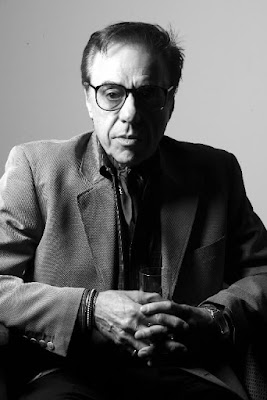
PETER BOGDANOVICH: The Hollywood Flashback Interview

Director Peter Bogdanovich.


Interviewing Peter Bogdanovich for the April 2002 issue of Venice Magazine was a thrill for me. Like Francis Coppola, John Frankenheimer, and William Friedkin before him, Bogdanovich was one of those filmmakers whose one-sheets hung on my bedroom walls growing up. Plus the fact that he himself had a renowned career as a film historian and interviewer of his own childhood heroes, such as John Ford, Howard Hawks, Orson Welles, and dozens of others, made our talk a real feast.

Not long after the article was printed, I received a letter with a New York City postmark. The note enclosed said simply: “Dear Alex, thanks for doing your homework so well, and thanks for the good vibes. All the best to you of love and luck, Peter Bogdanovich.”

Our chat remains one of my favorites during my 15 year tenure as a film writer. --A.S.


PETER BOGDANOVICH’S YEAR OF THE CAT
By
Alex Simon


Peter Bogdanovich is a Hollywood survivor. Few veterans of the business have reached such high highs and hit such low lows as the man who was born to a Serbian father and a Viennese Jewish mother, July 30, 1939 in Kingston, New York. Raised in New York City, Bogdanovich was a precocious child, showing an early affinity for performing and a love of the arts, particularly film. He studied with acting guru Stella Adler in his teens and was acting on stage, as well as directing theater, by his early 20s. Bogdanovich was primarily an actor in his early years, and not a critic, as many people believed due to erroneous reporting and word-of-mouth.

Deciding that making films was where his true passion lay, Bogdanovich came west in the mid-60s, where he quickly forged friendships with some of Hollywood’s most revered veterans: Orson Welles, John Ford, and Howard Hawks, among others. Bogdanovich sat with many of these men for in-depth interviews, many of which are compiled in his much-beloved book, Who the Devil Made It? (which was followed by a compendium of his actor interviews, Who the Hell’s In It?, in 2004). He was able to cut his filmmaking teeth working for B-movie legend Roger Corman on such classic trash as The Wild Angels (1967), which led to his directing debut, the thriller Targets (1968), about a mad sniper and an aging horror film star (Boris Karloff, in one his last, and greatest, turns) whose synchronous paths eventually cross. A low budget gem, the film brought Bogdanovich to the attention of producers Bert Schneider and Bob Rafelson, whose BBS Films was the DreamWorks of the late 60s/early 70s. They asked Bogdanovich what he wanted to do next, and the young director told them of this little-known novel about small town Texas in the 1950s…

The Last Picture Show (1971) is widely regarded as one of the seminal films of the 70s, if not the century. A bittersweet coming-of-age film, Picture Show garnered eight Oscar nominations, winning two, for Supporting Actor (Ben Johnson) and Actress (Cloris Leachman), and helped launch a new generation of stars: Jeff Bridges, Cybill Shepherd, Timothy Bottoms, Randy Quaid, Ellen Burstyn, and, especially, Bogdanovich himself, who garnered almost as much press for his affair with Shepherd and the dissolution of his marriage to writer/producer Polly Platt during the film’s production, as he did for the film itself. Bogdanovich had truly arrived. He and Shepherd moved into a palatial estate in Bel-Air. He was an occasional guest host on “The Tonight Show,” and contributor to such high-profile magazines as Esquire and Playboy. Two more cinematic triumphs followed: the zany comedy What’s Up, Doc? (1972) and the charming Paper Moon (1973). He formed a production company with pals and fellow wunderkinds Francis Coppola and William Friedkin, called The Directors Company. It seemed the sky was the limit.

In the mid-70s, Bogdanovich’s fortunes started to shift slightly, starting with a string of box office and critical flops: the period piece Daisy Miller (1974), the musical At Long Last Love (1975), and the comedic look at the early days of moviemaking, Nickelodeon (1976). By 1978, his relationship with Shepherd was over, but he did score a modest critical success with the fine Saint Jack, a low-key gem starring Ben Gazarra as a Vietnam-era American pimp in Singapore.

In 1980 Bogdanovich began his descent into personal and professional hell. While shooting his most personal film, the delightful They All Laughed, he fell in love with actress Dorothy Stratten, 1980’s Playboy Playmate of the Year. Two weeks after the film wrapped, Stratten’s estranged husband murdered the young starlet, and then himself, events later dramatized in Bob Fosse’s final film, Star 80 (1984). It was a horrific end to not only a young woman’s life, but a budding talent that both critics and her co-stars agreed would have developed into something special. Bogdanovich retreated from moviemaking and the public eye for the next four years, writing the controversial book The Killing of the Unicorn, detailing his love for Stratten and the still-reverberating effect her death had on him, and all those who knew her. By the time he did Mask, a critical and box office success in 1985, Bogdanovich was bankrupt, having spent his fortune trying to distribute They All Laughed on his own. He also unsuccessfully sued Universal Pictures for tampering with Mask’s final cut.

The next decade and a half saw a string of attempted come-backs by the once red-hot director, but nothing seemed to take hold, in spite of some solid television work, and a poorly-received sequel to Picture Show entitled Texasville (1990), which was hacked to pieces by its studio, removing nearly 25 minutes of key footage. Bogdanovich's restored cut is available on Pioneer laserdisc.

In spite of these myriad setbacks, Bogdanovich stayed in the ring and kept swinging. He’s scored a knock-out punch with his latest effort, The Cat’s Meow, fascinating piece of historical conjecture, detailing what might have happened on newspaper magnate William Randolph Hearst’s yacht in November, 1924, when a disparate group that included Charlie Chaplin, Marion Davies, Louella Parsons, and movie mogul Thomas Ince went for a relaxing getaway to Catalina, only to have one of the passengers mysteriously wind up dead…The film is part Hitchcock, part drawing room comedy, and a pure joy to behold. Fine work across the board from Kirsten Dunst (in her first adult role) as Davies, Edward Hermann as Hearst, Eddie Izzard as Chaplin, and Cary Elwes as Ince. The Lions Gate release hits theaters on April 10th.

Peter Bogdanovich sat down recently to reflect on his remarkable life, openly discussing all its triumphs, tragedies and quirks of fate.

When I heard you were making this film, I was thrilled. I’ve wanted to see this story filmed since reading Hollywood Babylon as a kid.

Peter Bogdanovich: Well, I read about it in Hollywood Babylon, as well, but the person who first told me about it was Orson Welles, about 30 years ago, when I interviewed him for a book we did (This is Orson Welles). The story didn’t make it into the book, but there is a reference to it, which Orson referred to as “a notorious incident.” At the time we did the book, we still couldn’t get into it, if you know what I mean. But 30 years later, the script came to me, and I said ‘My God, it’s that story Orson told me!”

Bogdanovich, in white hat, on the set of The Cat's Meow.

Even though the story is based on conjecture, since no one really knows what happened on Hearst’s yacht that night, the events in the film, as they’re portrayed, are pretty much the way most people believe things went down, right? I mean, I don’t think anyone who knows the story today believes that Thomas Ince died of “gastrointestinal distress.”

No, no. And I don’t think they did then, either. The famous quote from D.W. Griffith was “Anytime anyone mentions Tom Ince around Hearst, he turns white. There’s somethin’ funny there.” (laughs) But (the story) feels right. The death haunted everyone who was on that ship.

Well, why else would someone like Louella Parsons have had the career, and the amount of power, that she had? It all started right after Ince died.

That’s certainly a strong argument. She was a real pain in the neck to a lot of people.

Thomas Ince.

I’m glad to see that Thomas Ince is being brought back into the public consciousness because, aside from Ince Boulevard in Culver City, he’s largely a forgotten figure, and he was a real pioneer filmmaker.

Well, he wasn’t a poet like Griffith was, but he was a real pioneer in terms of how films are made, particularly the Western, and he was the first person to really come up with the process of doing a lot of pictures at once, which we bring up in the film. He was very ahead of time with the assembly line idea of making pictures.

Ince’s death was almost symbolic, wasn’t it, of a shift in how movies were made and studios were run?

Very true. Coincidentally that year, 1924, was the year (director) Ernst Lubitsch came to Hollywood, which really changed movies forever. He brought Europe to Hollywood in a way that hadn’t happened yet. I asked Jean Renoir once what he thought of Lubitsch. Renoir said “Lubitsch? He invented the modern Hollywood.” Of course, this was during the 60s, and the Hollywood of today is nothing like the Hollywood of that period. So what he really meant was films done from about 1925-1960.

You assembled an incredible cast for this, starting with Edward Hermann, who’s a brilliant choice for Hearst.

We got lucky. He wasn’t the first choice initially, and then he wasn’t available. We were very close to shooting and we didn’t have a Hearst yet. The actor we had cast backed out at the last minute, saying he was exhausted. Finally, it was suggested “What about Ed Hermann?” who I always thought would be great in the part. So it was fortuitous, really. A lot of luck.

There is a Movie God, isn’t there?

Yes, and sometimes He’s against you! (laughs) But sometimes the Gods are on your side. John Ford said to me once, “Most of the good things in pictures happen by accident.” I was shocked by that, at that point having only made one picture. But now I believe it to be very true. Luck is either on your side, or it’s not. (laughs)

It was terrific to see Kirsten Dunst playing an adult. She gave the part a lot of depth. The other portrayals of Marion Davies I’ve seen have been pretty cartoonish.

She was wonderful, wasn’t she? She worked really hard at it, and always wanted to do a 20s story. She has a wonderful period face, looks great in those clothes, and has great instincts.

L to R: Edward Hermann as William Randolph Hearst, Kirsten Dunst as Marion Davies, Eddie Izzard as Charlie Chaplin and Jennifer Tilly as Louella Parsons, in The Cat's Meow.

Eddie Izzard, who plays Charlie Chaplin, was terrific also. I wasn’t that familiar with him, prior to this film.

Well, Eddie’s a very famous British comedian. He’s not a standup in the traditional sense. He’s more like Richard Pryor was: he acts the comedy. He got two Emmys for the HBO special he did a couple years ago. Again, luck. My manager was handling him for a while and suggested that I see his act. So I went and saw his act, and he was hilarious. And while I was watching him being hilarious, acting this comedy, it suddenly hit me that he’d be perfect for Chaplin, because that was the toughest part to cast. He doesn’t look like Charlie, but the idea of an English comedian playing an English comedian wasn’t too much of a stretch. It turned out that he loved Chaplin, and also loved the idea that Chaplin wasn’t funny in this. He wanted to play a dramatic role.


From everything I’ve heard, in real life Chaplin was as serious as a heart attack.

Yeah, he was pretty serious. I met him once, late in his life, when he came out for the Oscars in ’72. He was having problems with his memory at the time, but was still madly in love with his wife, Oona. He was a little frail, and not particularly funny. You know how I met him? He was given a special Academy Award that year and my film, The Last Picture Show, was nominated for several awards. Coincidentally, the producer of The Last Picture Show, Bert Schneider, had made a deal with the owner of the Chaplin film library to bring all of Charlie’s old movies out again. Bert knew that I knew a lot about old pictures and asked if I would cut together a bunch of clips for the tribute before the award was given to Chaplin. He asked me what I needed, and I gave him a list of the pictures and an editor to work with. The compilation of clips I put together was 13 ½ minutes long, with the final 4 minutes being from The Kid (1921). I get a call from Bert later: “The Academy said it’s too long. We can’t run it. What do you want to do?” I said, “Bert, it’s Charlie Chaplin!” Bert agreed and called the Academy back, saying “We won’t cut it. It’s Charlie Chaplin, for God’s sake!” The Academy said “We won’t run a 13 ½ minute film clip on a live broadcast!” Bert said “Okay, then Charlie won’t come to the ceremony!” They ran it. (laughs)


Yeah, I’d say that was a deal-breaker.

(both laugh) It was marvelous. Everyone was crying at the end of it.

Your book, Who the Devil Made It?, is a terrific collection of the interviews you’ve done with classic filmmakers, from people like silent film pioneer Allan Dwan (who helmed the 1922 version of Robin Hood, with Douglas Fairbanks), to Sidney Lumet (Serpico, 1973), who got his start in live TV.

Thank you. I’m actually working on a sequel, called Who the Hell’s In It?, which is a collection of pieces on actors. There’s profiles of John Wayne, Cary Grant, Jimmy Stewart, Marlene Deitrich…It’s a different kind of book than the first one. It’s not all Q & A like the first book, although there is some. The first chapter is about Lillian Gish, and the second is about Bogart, who I never met. It’s got some of the magazine articles that I’ve written over the years. There’s a brief chapter on Marilyn Monroe also, who I never really met, although I saw her once in an acting class of Lee Strasberg’s that I audited, in New York.

Bogdanovich's collection of director interviews (above) and actor interviews (below), both best-sellers.

Let’s talk about your background. You grew up in New York. Your father was a Serb, and your mother a Viennese Jew.

Mom was Jewish and dad was Serbian-Greek Orthodox, although we had no religious training at all. My parents were turned off by orthodox religions.

For your early youth, you were essentially an only child.

Yeah, my younger sister was born when I was 13.

Bogdanovich sits with Orson Welles on the set of Mike Nichols' Catch-22, being photographed by Candice Bergen, 1969.

It sounds like it was your dad who really introduced you to the movies.

They took me to see regular pictures like Dumbo (1941), which was the first picture I ever saw, and I had to be taken out of the theater, screaming! (laughs) But my first really exciting experience at any kind of theater was at the opera, at the old Metropolitan Opera House. It was “Don Giovanni.” I remember him going to Hell at the end. It scared the shit out of me! (laughs) Then I started going with my dad to the Museum of Modern Art, where we saw silent movies, which is where I first saw Chaplin, Buster Keaton, Laurel & Hardy. I loved silent movies, actually, and it’s a good thing that I did, because it’s the foundation of movies. I think we’ve kind of lost contact with that.

Was there one film you saw during that period that did it for you, where you said “This is what I have to do”?

Well, I always loved the movies, but originally thought I was going to be an actor. When I was ten years old, my three favorite movies were Red River (1948), She Wore a Yellow Ribbon (1949) and The Ghost Goes West (1936), which was written by Robert E. Sherwood, produced by Alexander Korda, directed by Rene Clair, and starred Robert Donat. I must’ve seen that picture six or seven times. I just loved it, my favorite of the three. In fact, I’ve been planning a ghost picture. I’ve been planning one for 20 years. Mine’s called Wait for Me. I’m sure it all goes back to The Ghost Goes West.

Stella Adler was your primary acting teacher. Tell us about her.

She was a great woman, larger than life, very theatrical, very funny. She was extraordinarily influential on me, and a number of other people. Marlon Brando said that she taught him everything he knows. She influenced acting in movies to such a degree that she changed acting, as did Brando. She was just an extraordinary woman. I learned so much about the art of the theater and art in general. Stella didn’t think that art of any kind should be small. She thought it should be bigger than the kitchen sink, and should speak to important subjects.

John Huston, Orson Welles, and Bogdanovich, early '70s.

Was Orson Welles sort of a second father to you?

It’s funny, several people have commented that I’ve had several different fathers in my life. Orson filled in an awful lot of things that my father wasn’t equipped to do. My father was equipped to do a lot of things, but emotionally…he’d had a tough life. Unfortunately, I didn’t get to spend as much time with my father as I’d have liked. He died when I was quite young, while I was shooting Picture Show, in fact. Orson was more like an older brother, in many ways. He was a great authority figure, but he was still very boyish. It’s funny, Orson always wanted a son, but had all these daughters instead. He always said, “I don’t know what to do with women.” (laughs)

The first thing you directed was in New York on the stage, right?

Yeah, in 1959. I was 20. My first claim to fame was introducing Carroll O’Connor in the production. From there, he got an agent, went to Hollywood, and the rest is history. He gave me credit for that, once. When he won his first Golden Globe, for “All in the Family,” I was nominated for Picture Show. I was sitting down by the winner’s podium and he said “There’s a young director who’s nominated here tonight who gave me my start in New York. He’s an arrogant son of a bitch, but I thank him.” (laughs)

When you realized you wanted to direct films instead of plays, you came to Hollywood. It was then that you met all these amazing directors of yesteryear, whom you interviewed. Since you didn’t go to college, was this your film school, so to speak?

Absolutely. You put it in a nutshell. It was like the greatest university, or master’s class that one could get. I was able to put myself through this with all these pioneers who were still alive then. Independent film wasn’t really around at that point and the only ting going on in New York was the underground movement, with Andy Warhol and that crowd. That wasn’t my thing. One of the main reasons I came out to Hollywood was to meet and learn from these old masters. How do you get to know about this medium unless you ask the people who’ve done it? And they were all here: Jack Ford, Howard Hawks, King Vidor. There’s a lot of people I talked to who I didn’t officially interview. But I was able to actually sit and interview 18 of these directors.

Bogdanovich interviews Jimmy Stewart, late 1960s.

Stylistically, the two directors who’ve influenced you the most are John Ford and Howard Hawks.

I guess that’s true, although you’d also have to include Orson Welles, not stylistically, but in other ways.

If I were someone off the street, with just a layman’s knowledge of movies, and I asked you to tell me the difference between the films of Hawks and Ford, what would you tell me?

I asked Orson that question once, and he gave me the best answer. He said “At their best, Hawks is great prose, but Ford is poetry.” I think he was right. That’s accurate. Although Ford made more pictures that don’t work today, than Hawks did. Ford’s films had a sentimentality that Hawks’ didn’t.

Director John Ford.

What’s your favorite Ford picture?

It varies. I love The Quiet Man (1952), The Searchers (1957), The Man Who Shot Liberty Valance (1962). Also My Darling Clementine (1946), They Were Expendable (1945). These were all great pictures.

Director Howard Hawks.

What about your favorite Hawks film?

To Have and Have Not (1944), Rio Bravo (1959), The Big Sleep (1946), Bringing Up Baby (1939), Twentieth Century (1934).

It’s amazing that one man made all those movies, all from different genres.

I know. He was remarkable.

I think Scarface (1932) still holds up really well. It was one of the first films cut for action, wasn’t it? The editing still feels very contemporary.

Yeah, it’s just superb on every level, except for that horrible post-script that was slapped on the end of it, with these newspaper men standing around, pontificating about what a horrible thing we’d just witnessed. And what really irks me about Red River, which is one of my favorites, is that you can’t see the right version anymore. The version they have on video, which is listed as the “Director’s Cut,” is not! I’ve tried to call the people who own the rights and tell them, ‘Not only is this not the “Director’s Cut,” it’s the cut that Howard disowned!’

How are the two cuts different?

There’s the narrated version, and the text version, where there’s this big book where the pages keep turning. That was the preview version which Hawks threw out, and rightfully so. It’s too slow. Then he had the version that Walter Brennan narrated. That’s the version that Howard liked, but you can’t see it anymore. Maybe they can’t find the other cut, which would be tragic.

Let’s talk about your time with Roger Corman.

Previous to my work on The Wild Angels, Roger had asked me to write a script for him a war script, something that he could shoot in Poland, where he had a great location scouted out. “Sort of like Bridge on the River Kwai and Lawrence of Arabia, but cheap!” (laughs) And that was the beginning of a script called The Criminals, which never got made, but was a pretty good script. Then I got the call from Roger to work as his assistant on The Wild Angels, which was then called All the Fallen Angels. That was an incredible experience. Twenty-two weeks I worked on that. I directed 2nd unit and cut my own footage. I also re-wrote the entire script, but didn’t get credit. To this day, I don’t think even Peter Fonda knows I wrote that picture. (laughs) I learned a lot. Roger throws you in the water and says “Swim!”


Bogdanovich's directing debut, Targets (1968).

All of this led to a terrific film, called Targets.

Thank you, and unfortunately, it’s still relevant. We based it on Charles Whitman’s shooting spree at University of Texas in 1966. My first wife (Polly Platt) and I collaborated on the story. I wrote the first draft of the script, then Samuel Fuller (The Steel Helmet, 1951; Shock Corridor, 1963) asked to read it, and during about two hours of conversation, he re-wrote the entire script! Sammy wouldn’t take credit for his work. He said “No credit, kid! If you give me credit, they’ll think I did everything!” And he practically did! He was a great guy. Boris Karloff owed Roger two days work on a picture, so that’s how Karloff became involved, and we interwove the parallel stories of this aging horror film star and this homicidal maniac until their paths eventually crossed.

Director Sam Fuller.

Was your character in the film, Sammy, named after Samuel Fuller?

Right, “Sammy Michaels,” Michael being Sam’s middle name. I owe a lot to Sammy. The film got some good reviews and some attention, and that’s really what got me Picture Show.

Bogdanovich with Boris Karloff in Targets (1968).

What was Mr. Karloff like?

Oh, what a wonderful man he was. He was just sweet and dear, and very funny, very acerbic. He was 79 when we shot that, and very ill at the time. But he never complained. He was a real trooper, especially when we shot the drive-in stuff. We only had him for one day during that sequence!
Let’s talk about Picture Show. Sal Mineo gave me the book originally, and had always wanted to play the part of Sonny (played in the film by Timothy Bottoms). By then, he was too old, but he thought I’d like it, and I did. I didn’t really know how to make it initially, until I realized the only way to make it was just to make it! (laughs) To shoot the book, which is basically what we did: we just shot the book. The script followed Larry McMurtry’s original construction which was basically one football season to the next in this small town. How were you able to make the film relevant to yourself since, here you were, a New Yorker, making a picture about kids in small town Texas during the early 50s? I think the teenage experience is similar everywhere, which is why people who saw the picture and grew up in places like New York, or Europe, or Australia, all related to it very deeply. That’s why it has universality. It did for me, even though Texas for me was a foreign country. I approached it like a foreign country, learning about the music, watching the people, how they dressed, how they interacted. I never even knew who the hell Hank Williams was before that picture! (laughs) Jeff Bridges and Cybill Shepherd in The Last Picture Show (1971). Do you feel that Picture Show on one hand was a terrific experience because it made your career, but on the other hand, that it’s also become your cross to bear? No, I don’t. I mean, unlike Orson, who did feel that way about Citizen Kane, I don’t feel that way because I have made other pictures that did business and that people liked, whereas with Orson, it was the only one that people had ever heard of. He made great films that no one’s ever heard of. When people approach me, they don’t just mention Picture Show, there are other films they’ve liked, but that wasn’t the case with Orson. In fact, he said to me once—we were talking about Greta Garbo, and he loved Garbo—I said, ‘Isn’t it a pity with all the movies she made, she did only two really great ones.’ Orson says “Well, you only need one.” (laughs) So I thought, if you only need one, at least I got the one out of the way early on. What’s Up, Doc? is another terrific film. It’s been said by critics and film scholars that Picture Show was your John Ford homage and Doc was your Howard Hawks homage. (groans) Oh God, they always say that shit. I think all that started because I had to open my big mouth, and I said something to the effect that The Last Picture Show was inspired by The Magnificent Ambersons (Orson Welles, 1942) because they’re both about the end of an era. From there on it went because there were some obvious John Fordian moments with a couple of the long shots and shots of the sky. All of my reviews in the 70s and 80s were predicated on a basic piece of misinformation, which is that I began as a critic. So all the reviews were “Well, he was a critic, so this is his ‘X’ movie and this is his ‘Y’ movie,” which is bullshit! I was never a critic. I was an actor! Bogdanovich lines up a shot on the set of What's Up Doc? (1972) They were trying to make you into the American Francois Truffaut. Right, exactly. I had written about film, but I was a popularizer more than anything. I wrote features and interviewed people who interested me. But to say that I consciously thought this picture was an homage to someone was ridiculous! They even said that Paper Moon was my homage to Shirley Temple! Give me a break! (laughs) Did you ever see Shirley Temple light up a Lucky Strike or swear? It was anti-Shirley Temple! So it was completely wrong and it went on for years. With What’s Up, Doc? we had a similar set-up to Hawks’ Bringing Up Baby (1938), which was “daffy dame meets stuffy professor,” plus one joke, where she rips his jacket, but that’s it. The challenge on that picture was “How do you do a picture with Barbara Streisand?” Well, you make a screwball comedy. She actually wanted to do a drama because she’d just done a comedy (The Owl and the Pussycat, 1970), but I’d just done a drama, so I wanted to do a comedy. (laughs) In the end, I won. It was really a picture that was almost made on a dare. I had more fun on that picture than anything I’ve ever done. Ryan and Tatum O'Neal in Paper Moon (1973). Paper Moon recreates a time and place better than any film I’ve ever seen. We worked really hard to get that period-feel right. We shot all over Kansas and a few weeks in Missouri. I think it’s the best work Ryan O’Neal’s done. That wonderful laugh he came up with, that cackle, was just wonderful. Paramount owned the property originally and had John Huston lined up to direct with Paul Newman and his daughter to star. Then they wanted me to direct, but I didn’t particularly want to do it with Paul. I wanted to do it with Ryan, so that’s what happened. Around this time, you, William Friedkin, and Francis Coppola formed The Directors Company, which seemed like a great idea. What happened? I thought it was a great idea and made two pictures for the company (Paper Moon and Daisy Miller). Francis made one (The Conversation, 1973), and Billy never did a picture for the company, then decided he didn’t want to make any pictures for the company. He wanted to make more money. The money we could make was limited to a certain amount, which I thought was perfectly good, but Friedkin felt he wanted more money, and more money for the budget. Our deal was, we could make any picture we wanted, as long as it was three million or under, which was a lot of money in those days. We could also produce a movie for someone else if it wasn’t more than $1.5 million. We didn’t’ even have to show them a script! It was a great deal, and I wish I could get one like it again. That kind of freedom is worth gold, I think. It was a shame. What did you think of Peter Biskind’s book Easy Riders and Raging Bulls, the notorious account of this period in Hollywood? I dipped into about three pages of it in a book shop and got nauseous. (Biskind) just didn’t get it at all. He’d interviewed me a couple times and quoted people who either weren’t around or didn’t know what they were talking about. It was just awful. A bad book from a very good writer. Daisy Miller and At Long Last Love, Bogdanovich's first two flops. Nickelodeon was an interesting film. Well, I’m not completely happy with the way that picture turned out. Both Nickelodeon and At Long Last Love were sort pet projects of mine and neither came out the way I wanted, which is the reason I stopped making pictures for three years. I mean, they were okay, but they just didn’t turn out right. Nickelodeon was meant to be in black & white and I wanted John Ritter and Cybill and Jeff Bridges and…I just had a smaller picture in mind. Both Burt Reynolds and Ryan (O’Neal) were good in it, and Jane Hitchcock was good, but she didn’t have any threat about her. So I quit making pictures for a while, because I felt both films had been compromised. Somehow, I’d had all this success then suddenly made these pictures that I felt were compromised. So I went back to basics and made my next two pictures exactly the way I wanted, but for less money. People thought I couldn’t get a job during that period, which is absolute nonsense.
Bogdanovich with Ryan O'Neal and Burt Reynolds on the set of Nickelodeon (1976), another personal and critical disappointment. What did you do during that period? I went around the world with Cybill twice, and turned down a lot of pictures. I didn’t want to work again until I figured out how I could work with integrity. So after that, I did Saint Jack, which turned out well and was an amazing experience, and then They All Laughed, which is my own favorite, but became a tragedy when Dorothy (Stratten) was murdered. That’s something that we’ve never gotten over, but we’ve all had to move on from. I say “we” meaning the people who were close to her. Bogdanovich with cinematographer Robby Muller, Monika Subramaniam, and Ben Gazzara on the Singapore set of Saint Jack (1978). What was it like shooting Saint Jack on location in Singapore? Well, it was…fascinating. (laughs) One of the most life-altering experiences I’ve ever been through. It was comparable in my life to the upheaval of my personal life during Picture Show. My relationship with Cybill technically ended with that. I was gone for six months and Ben Gazzara was there for four months. We only shot 12 weeks, but the rest of the time was spent doing a lot of research and preparation. We had a bare bones script but no real characters and no women at all. It was a story about a pimp and his hookers, and we had no women characters! So, to be candid, I didn’t know that much about hookers and the writer, Paul Theroux, wasn't much help, so Benny and I and all of us got pretty involved in the scene there. It was pretty extraordinary, what we learned, about all of these women and how they came to be there, and basically much of what’s in the film was based on what we learned from these real hookers. Singapore is sort of the melting pot of Asia, like New York is for the U.S. All those locations you saw were real, most of which are gone now, and most of the cast were non-professionals. Bogdanovich and the late Dorothy Stratten on the set of They All Laughed. They All Laughed is one of my favorite of your films. It certainly is mine. It was a labor of love. Everyone in it was either in love, falling in love, falling out of love, or having problems with love. In that film, like in Saint Jack, we inferred a lot, instead of spelling it all out, which some people took as meaning it had nothing to say. Unfortunately, tragically, Dorothy Stratten was murdered two weeks after we wrapped, so nobody from that moment on could ever see her or the movie as we intended it. It was intended to be bittersweet. The sweet was supposed to be Dorothy and John Ritter. The bitter was supposed to be Audrey Hepburn and Ben Gazzara. But after Dorothy’s death, it was all bitter. Ben Gazzara and Audrey Hepburn in They All Laughed. Tell us about Audrey Hepburn. She was so magical. She broke your heart. Audrey was everything anybody thought she was: she had grace under pressure; she was a complete professional without one egoesque moment in her life; she cared about people; she had a great sense of humor; she was quietly sexy in a very ladylike way; she was very girlish, still at age 50. It was her last starring picture, which I knew it would be, strangely enough. She just wasn’t that into (acting) anymore. I think she preferred bringing up her children…I always felt that picture would never really work until everyone in the picture was dead, and then it would sort of become neutral again. With Dorothy and Audrey now gone, I think it’s taken on a little distance. A lot of audiences, like in Seattle and Beverly Hills, really liked it and got it, but I never should have tried to distribute the picture myself. The cast of They All Laughed poses in front of the film's poster. Why did you buy the rights to the film and then try to distribute it yourself after Dorothy’s death? Because I was out of my mind. It was a disaster. I was an idiot. I was so paranoid after Dorothy’s murder, I wanted to protect the picture at all costs and was afraid they would fuck up the distribution. I wanted to pull away from the studio that was handling it, and I did, by buying the rights to the picture for $350,000 cash, which at the time was a lot of money, plus the guarantees that wound up costing me $5 million! The point is, it was a mistake brought on by paranoia and grief, and not dealing with the grief, and just trying to write a book about it, thinking that would be enough, but it wasn’t. In writing the book, I thought I was venting all my anger, which I was, but in the end, the only person I ended up hurting was myself. I lost my financial freedom as a result. Nevertheless, I learned a few things, one of which is you cannot, in any event, self-distribute. The only person who ever got away with it was (John) Cassavetes, who very successfully distributed A Woman Under the Influence (1974), but then lost it all over Killing of a Chinese Bookie (1976). You just can’t fight these people. By 1985, I was bankrupt. The only reason I got through ’83 is because I did Mask, which I had to do because I was broke. There was a four year gap between They All Laughed and Mask. Yeah. I was consumed with distributing They All Laughed and writing Killing of the Unicorn. I turned down a lot of offers during that time. I just couldn’t do anything. My agent (would say) “Forget it, don’t even ask him. He’s writing a book,” which, of course, got me into even more trouble. It sounds like you did Mask for the money, initially. Initially, yes. The script, which was originally 100 pages that dealt with Rocky Dennis’ life, needed a lot of work. So I sat through nine drafts of that picture working with this writer, working on the construction and the dialogue. Then we shot the picture and I rewrote most of the biker dialogue on the set with Cher and Sam Elliott. I got into it, aside from the money, because it reminded me of how Dorothy was very taken with The Elephant Man. She bought a book that was a serious study of John Merrick, the Elephant Man, and had seen the play on Broadway. I remember her buying it at Doubleday one night and the photographs were rather graphic. I couldn’t look at them, but she was riveted. I figured out later that she identified with him. Here was this gorgeous creature that everyone would stop and stare at, from adults, to kids, to dogs. Just gawk at her. Dogs especially would just go to her like she was a goddamn milkmaid! And she never understood why she had this extraordinary affect. She just radiated this extraordinary beauty and goodness, which the camera never captured. She was too complicated for the camera. Her face changed every few seconds. It was quite amazing. A lot of people who knew her said that. So what made me decide to do Mask, really, was thinking back to Dorothy’s complete lack of ease when people looked at her. She said, “I feel like I have ice cream on my shirt, or something.” There was this connection with Dorothy feeling like an outsider because of her beauty, and Rocky Dennis’ feeling like an outsider because people found him hard to look at. The two are not dissimilar. Eric Stoltz, Cher and Bogdanovich on the Mask set. Making it must’ve been a cathartic experience for you. Yeah, it was, although what you saw up on the screen was only 90% of what we did. We ran afoul of the studio head, who had other interests in mind, and ours was not one of them. They cut about eight minutes of key scenes, and changed the music on the soundtrack. The character of Rocky loved Bruce Springsteen. His whole room was the Beatles and Bruce Springsteen posters, for God’s sake! They didn’t want to make a deal to use Bruce’s music, so they replaced it with Bob Seger, without my approval. There was a deal to be made, too. Bruce wanted his music to be a part of this film. We had an understanding that if it wasn’t going to be Springsteen, it would be the Beatles! But they made a deal with Seger behind my back. And I like Bob Seger’s music very much, so it had nothing to do with the quality of his work, but it just wasn’t right for the picture. So, I filed a lawsuit which, again, I shouldn’t have done. That was a mess. It hurt the picture and it hurt me. After seeing your original cuts of Mask and Texasville, both of which were tampered with by their studios, it’s amazing how different, and how much better, your cuts are. They’re completely different films than what were released. Yeah, they cut 25 minutes out of Texasville, which was supposed to be a bittersweet picture like Picture Show was. They wound up cutting most of the bitter and keeping in the sweet, which completely threw it off balance. And the thing is, when the schmucks in the executive suite do this to your picture, you as the director are the one who gets blamed, not the studio people who ruined it! I did another film called Illegally Yours (1988), with Rob Lowe, that I had high hopes for, but it was re-cut completely by Dino De Laurentiis. It’s not a good picture, and that’s why. I hope we can do DVDs of the original cuts of Mask and Texasville, which actually was available on Pioneer laserdisc, but is now out of print. We’ll see… (Editor’s note: PB's cut of "Mask" is now available on DVD, as is his black & white cut of "Nickelodeon"). Obviously with 25 minutes added, Texasville is a completely different picture, but it amazed me how different Mask was with just an extra eight minutes and Springsteen on the soundtrack, instead of Seger. Yes, it all counts. It all matters. If you tamper with something like that and remove a part of it, the whole structure comes tumbling down, like a house of cards. The people who run the studios don’t realize this because they’re not filmmakers. But this is nothing new. You can go back to the silent days and filmmakers were treated the same way, like Erich Von Stroheim, whose eight-hour epic masterpiece Greed (1925) was cut down to two hours and twenty minutes by its studio. Think that was a different movie? (laughs) The point is, they know what they’re getting into going into it. To green light a picture that’s built a certain way, and then tear it apart once it’s been completed in that way, does this make sense? You’ve probably had more high highs and low lows than anyone I’ve interviewed in the film business. How do you keep hope alive and keep your chin up during those bad times? I don’t know. (long pause) I don’t know…My mother and father, I suppose, set a fairly good foundation for me, so I haven’t sunk into the earth yet. (laughs) I think they had kind of a sense of art and culture and civilization that they instilled in me that helped give me some strength. Then, of course, there’s my family, and in the case of Dorothy, Dorothy’s family as well. So I was never alone in these things. Some sense of the past, I suppose, also helps. Do you think it’s just a matter of knowing who you are? That doesn’t hurt. A lot of people, especially recently, have experienced tragedy on a huge scale. I think you learn to live with it, as opposed to getting over it. As far as movies are concerned, they pale in comparison to a real life tragedy. Bogdanovich as Dr. Kupferberg in HBO's "The Sopranos." You’ve been acting a lot again, most notably in Henry Jaglom’s new film Festival in Cannes and in “The Sopranos,” in a recurring role as Dr. Elliott Kupferberg. I love doing that! It’s been a tremendous thing for me to be able to do that, and I’m forever grateful to David Chase for allowing me that opportunity, because a lot of other people would’ve given their eye teeth to be in that show, and he just offered it to me. The other thing I’m very happy about that show is that it’s clarified in a lot of people’s minds that I started out as an actor and have always been aligned to that side of the camera, as opposed to having people think I was a critic. (laughs) What advice would you have for a first-time director? Well, one of the main things is knowing what you want in terms of the scene, so you don’t make your actors do it 17 different ways. At the same time, you want to leave yourself open to the possibility that there might be better ways of doing it. Respect Lady Luck, because she’ll be there sometimes. Also, I would read as much as you can about filmmakers. My book, Who the Devil Made It? was written just for that purpose. I recommend it not because I wrote it, but because it offers a wealth of knowledge from some of the greatest filmmakers of all-time. And that’s where you have to go for knowledge, back to the source.

Labels