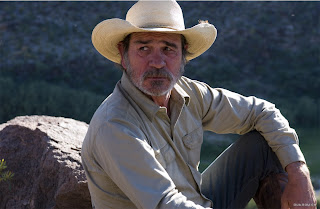
James Coburn: The Hollywood Flashback Interview

I interviewed James Coburn in late 1998 for the cover story of the February 1999 issue of Venice Magazine. I had grown up watching Coburn on the late show, but also seeing him on the big screen, first-run. Meeting him was a thrill as he entered the living room of his manager, the late Hilly Elkins', home in Beverly Hills. Coburn was elegant, charming and had the grace of a cat. The only thing that revealed the health problems that had nearly done him in were his gnarled hands, the result of severe arthritis. We spoke about his role in Paul Schrader's newest film, "Affliction," which would earn him a Best Supporting Actor Academy Award. Later, as I walked Coburn to his Acura NSX sport coupe, he bid me a warm farewell.
Several months later, I encountered him again at The Independent Spirit Awards, in Santa Monica. I went up to greet him and was given a cold shoulder. This was my first experience with interviewing an actor who was a charmer when "working" and then running into him/her in public later and being reminded of my inferior position in the pecking order. I have no idea what was going on with him that day, but being that I was barely 30 years of age, I took his snub very personally, and let it stew for a quite a while. A couple years after that, he approached me at a Venice Magazine party, offering his hand: "Hey there!" he exclaimed. "I never did tell you how much I enjoyed your article." We chatted for a few more minutes, then went our separate ways. I have no idea if he was being genuine that final time I saw him, or if he was "acting," and at this point, I don't care. I got to sit and spend time with one of the screen's greats who'd worked with the screen's greats.
Suffice to say, they don't make 'em like Jim Coburn, cool daddy, anymore.
JAMES COBURN:
COOL DADDY
By
Alex Simon
cool n 1: Self-assurance 2: sophistication
3: calm 4: Poise, composure 5: See Coburn, James.
James Coburn was born August 31, 1928 in Laurel, Nebraska. His father, an auto mechanic, moved the family to Compton, California in the early 30's at the height of the depression, in hopes of finding a better life for his family. Young Coburn stayed in Compton through high school. Following military service in the Army, Coburn studied acting at Los Angeles City College, USC, and with the legendary Stella Adler in New York. He then returned to Southern California, where he made his stage debut at the La Jolla Playhouse in Billy Budd. Following some work in commercials and live TV, Coburn made his film debut in 1959 in Ride Lonesome, a Budd Boetticher-directed horse opera starring Randolph Scott. He then hit paydirt with his supporting role in the smash hit The Magnificent Seven in 1960, following this with the classic The Great Escape in 1963. Coburn continued doing solid supporting work in film and TV throughout the early 60's, finally earning leading man status as superspy Derek Flint in Our Man Flint (1966) and In Like Flint (1967). He formed his own production company in 1967, Panpiper, producing the critical and cult favorite The President's Analyst, a brilliant social and political satire that is now widely regarded as one of the seminal films of the 1960s. Coburn also did three films with ultra-violence guru Sam Peckinpah: Major Dundee (1965), Pat Garrett and Billy the Kid (1973) and the WW II drama Cross of Iron (1977) which showed the war from the German P.O.V., and directed second unit for Peckinpah's Convoy (1978).
Coburn's screen persona gave Americans what Sean Connery gave to the English: an urbane, sophisticated hero, who can let loose a one-liner, dry martini or deadly karate chop in the blink of one eye, while winking at us, the audience, with the other. His cat-like grace and steely intensity made him one of the top box office stars of the 60's and 70's, and Coburn still retains a strong following of fans as the 1990's come to a close.
Coburn has appeared in dozens of films. Just a few other noteworthy ones include Don Seigel's Hell Is For Heroes (1962), Charade (1963), Paddy Chayefsky's The Americanization of Emily (1964), Sergio Leone's Duck You Sucker! (1971), Richard Brooks' Bite the Bullet, and Walter Hill's Hard Times (both 1975). A near-fatal bout of rheumatoid arthritis slowed Coburn down in the late 70's, just when he was reaching the peak of his career. After focusing his considerable discipline on building (or re-building) his body, Coburn now happily declares that he is "pain free." Seeing the silver-maned, elegant Coburn stroll through the garden of the Beverly Hills home where this interview took place, one would never guess this was a man who was near death once upon a time. The lithe, cat-like grace is still there, as is the charm, easy laugh, and ten thousand watt smile that has been captivating the movie-going world for nearly 40 years. The foremost thing on Coburn's mind these days is his latest film, Paul Schrader's Affliction. In it, he plays Pop Whitehouse, father to Sheriff Wade Whitehouse (Nick Nolte). Affliction is the searing, much-talked about film that deals with domestic violence as it's passed down through the generations of a family like a cancerous heirloom. Coburn's venomous performance has critics and the public alike buzzing "Oscar." If nominated, it would be a first for Coburn, who, at 70, seems less like an old veteran gunning for a last lap around the track, than a seasoned pro whose powers are every bit at their peak when he enters the ring. There goes the bell. Round one...

Your character Pop Whitehouse is one of the most loathsome villains to grace a movie screen in recent memory. Did you have trouble shaking him off once the picture wrapped?
JAMES COBURN: Not really, because I got it all out. It's really when you can't get it out or when you're doing it on stage and you have to do it over and over again that it can be troubling. But I learned long ago how to get rid of it by doing it! (laughs) You get it out...villains are really fun to play because they're usually meatier characters, because they've made decisions that haven't all been very good ones, (laughs) and are paying the price, with a little karma attached. They have something to say, I think. I never play them as a "bad guy." I play them like I have something to accomplish. In Affliction, it was "I have to get my boys to be men! If they're not strong men, by God, I'll beat the shit out of them!" That's what makes him seem so savage...it's that conflict. Scripts without conflict are really boring. Characters without conflict are really boring to play, because you're always trying to catch up with something. And this one was just loaded with conflict. Paul (Schrader) said to Nick and I in the beginning "I'm just gonna let you two guys go after each other!" And we did. We went for it. It was great fun. I'd like to do it all over again.
Is it difficult to go to such a dark place as an actor?
It's sometimes difficult to find, initially. But as actors, we don't have to be who we're playing. That's one of the good things about being an actor. But, if you let yourself get locked into that, where that character becomes your essence, that's scary. There was an old film called A Double Life (1947), starring Ronald Coleman, where he became so infected with Othello, that he actually performed it for real, with his own Desdemona. Stella Adler, who I studied with, said "Actors act. They don't have to be their roles." On Affliction, we were all joking around between takes, then when we went back to it, boom! We were right back into it again, because it was written so well. It was very straight-on. There was no ambiguity about the characters, and it's really fun and enriching when that happens. As actors that's what we try to do, enrich our own beings by absorbing impressions, then generating it out through our craft and giving it to the audience. Truth is obvious, it's always obvious, isn't it? Screenplays sometimes hide the truth, which isn't necessary. You have to give audiences some credit. You don't have to play around the truth. And what Pop Whitehouse was saying, even though you might hate him for it, was the truth! He knew exactly who he was. He was, nevertheless, afflicted, but he was also very honest.
Tell us some more about working with Paul Schrader.
Schrader knows what he wants and knows when he's got it. He'll play to shades. "A little darker, Jim." "Not so bright!" (laughs) It was a very good shoot, not difficult at all. And Paul certainly helped in that.
What was it like studying with Stella Adler?
Great. I actually studied with Jeff Corey out here first. His philosophy was more improvisational. Get away from your ego, get away from lines, things like that. Learn how to play the action of the scene, that's what improv is really about. Stella, on the other hand, was into style. The style of Shakespeare, modern styles...she'd show you how to do it. You'd see her transform into a raving hag and then into a little girl. Drop of a hat, bang. That's what I mean about acting. You don't have to live it. As long as the character doesn't inhabit you, that's the kick of acting. De Niro studied with Stella. She was furious with him for putting all that weight for Raging Bull. (laughs)(imitating Stella) "What are you doing to yourself?! You'll ruin your health!" (laughs). She was very demanding, very hard on women especially. She would just strip you down, peel your ego right off your skin.

Who was in your class at Stella's?
Warren Beatty was in my class. He played piano in this Irish drama we did called Red Roses for Me. I played an Irishman (in an Irish brogue) "Aye, what's goin' on over here?!" (laughs) There were a couple others, but Warren went on to the most prominence. From there, I went onto live TV. The first thing I ever did was with Sidney Lumet. That's how I paid my rent, that and commercials. I once did a Remington Rand commercial where I shaved off eleven days of growth, live on-camera, in less than a minute! (laughs)
You did a couple Twilight Zones also. What was Rod Serling like?
Serling was very tight-lipped. He had a jaw that never completely opened up! (laugh) But I really loved him. He was a sweet guy. I was always running into him when he was going back to D.C. to "do something." He was very active politically, always trying to "get things done." That's why all of his things had some sort of a political bent. Not just political, but sociological as well. They were all about something. You just don't have that anymore. You have a couple of guys beating each other up, a little sex here and there, but it's not about anything anymore. As good as NYPD Blue is, it's about relationships, and nothing else. But Rod was great, he was just dynamite and that's what killed him. He just used all of himself up. But now they don't even need actors. They've got The Rugrats, they've got the pig (Babe), they've got cartoons...they're slowly getting rid of the actor, which they've been trying to do for years. (laughs) "Why do we need actors?"

You and Steve McQueen were great friends. Tell us about Steve.
Steve always thought of himself as a re-actor, not an actor. I think he got that from John Wayne (laughs). What can I tell you about Steve? (His first wife) Neile used to call him a "male nymphomaniac." (laughs) He had an incredibly dynamic personality. He was like a kid. He said to me one time "Why can't they make a movie about just one guy--me!" (laughs) He even had a script idea about a guy who crashes in the desert, and trying to survive. While we were shooting Hell is for Heroes, we were shooting up in Redding, where it was so hot, I mean 110 in the shade. And the studio gave him this convertible. And we'd be driving along the road, and all of the sudden he'd shoot off the road and go tearing through the woods, as fast as he could until he ran into something! So he wore this car out in about a week and a half, and they sent a guy out who said "What the hell happened to this car?!" Steve said "I dunno. It just stopped running." (laughs) He would always test the producer, Marty Ransohoff. When they were doing The Cincinnati Kid (1965), he ordered two dozen pairs of Levis on the studio! Marty said "What the hell do you mean?! You don't wear any Levis in this picture!" Steve said "Yeah, but I wear them to and from the picture." (laughs) He hated to go out in public. He hated to sign autographs. He hated people to come up and bother him. So he'd put on disguises to go out.
It sounds like you guys were polar opposites.
We were, except that we both were fascinated with cars. We hung out together quite a bit, would drive cars, smoke grass, have a great time. He was a unique character, all those guys were. Steve. Peckinpah...

Tell us about Sam Peckinpah.
Sam Peckinpah was a genius for four hours a day. The rest of that time he was drunk. He called himself "a working alcoholic," but he was much more than that. I think the alcohol sort of quelled all the influences that were going on around him so he could really focus on what he was doing with the film. He would shoot with three cameras and just...do it. You never talked with Sam about things like motivation. I asked him one time, when we were doing Major Dundee. I said "Sam, what is it that makes my character tick?" And he thought about it for a minute and finally said "Drier. Dry. He doesn't give a shit." And that's who that character was! And that's how I played him...It was really sad what happened to that picture. The studio took it away from him and re-cut it. We had a great knife fight in that picture, between Mario Adorf and myself. And it was a viscous fucking knife fight. While we were shooting it, people were yelling for us to stop! That's how real it looked. It was a terrific piece of action, and it was cut from the film...the night it premiered at the Paramount theater, Sam saw the studio's cut and was just devastated. His hands were shaking. He had half a pint of whiskey and dropped it. It smashed on the floor. And my wife at the time said "Sam, it's okay, it's only a movie."
When you look at Major Dundee, it's sort of like looking at the U.S. cut of Pat Garrett, which was also severely compromised by the studio. You can see there's a masterpiece in there somewhere.
I agree, but what they call the "director's cut" of Pat Garrett is actually just the television cut. Sam had the only true cut that he made, and that's up in his archives in Sonoma. When he finished cutting Pat Garrett, it was taken away from him. This was Jim Aubrey at MGM and he was more interested in getting his hotel ready than he was in film. I think he really despised anybody who displayed artistry. He really like digging into them. When we started shooting Pat Garrett, I just finished shooting a film with Blake Edwards called The Carey Treatment (1973) that Aubrey also took away and re-cut. And I said to Sam "This guy's crazy! He could do this film all sorts of harm." Sam said "Don't worry about a thing, Jim. I just bought one share of stock in MGM, and if they mess with me, goddammit, I'll sue their asses!" (laughs) "One share of stock, Sam?! What's that gonna do ?!" "You'll see." (laughs)
I heard a story that Peckinpah got drunk during the shoot and didn't want to kill Billy. True?
Yeah, but he wasn't that drunk. We were sitting in his trailer and he said "Goddammit! Why do we have to kill him?" "Well Sam, that's the way it happened." "Well, why can't we make it un-happen?" "Sam we can't do it." (beat) "Why...not?!" (laughs) I think he saw a lot of himself in the character of Billy...We found out halfway through the shoot that most of the masters we had shot were out of focus. We were using five or six cameras at once and we didn't have a camera mechanic because MGM wouldn't pay for one! So we used different lenses, different set-ups, and still, it's all out of focus. Finally the camera mechanic is sent out. It turns out the flange in the camera was off by one one thousandth of an inch, or some damn thing. So we tell Aubrey that we have to re-shoot all these masters. He says "You're not gonna re-shoot anything. The audience isn't gonna know the fuckin' difference!" Can you imagine?! It was just mind-blowing! So what we did was, we stole all those shots when the brass didn't know we were shooting and got it all! So now this really pissed them off, because now we had some real film on our hands! (laughs) So Sam had his cut previewed, and at the same time, Aubrey had his guys cutting their film. So all the editors got together and gave Sam a cut of his film, but without a soundtrack. He didn't get that back until he cut it for television. But there's only about five minutes missing from that cut he originally made.

I thought R.G. Armstrong was really amazing in that film.
R.G. Armstrong saved my life. I had rheumatoid arthritis really badly and every day for ten months he'd come over and give me a deep tissue massage. I couldn't stand up without breaking a sweat. This was about 1978-79. I didn't come out of it completely until the last couple years. Doctors don't really know anything about arthritis, other than to say "take these." So I went on a long fast, fifteen days, then broke the fast. Took a blood test and found out I was allergic to 45 out 75 foods that I was tested for. Started eating right, but I was still contaminated, so R.G. came over and just broke down all that crystallization that had occurred. I was turning to stone, really, is what happened. I'm free of pain now because of this drug I'm taking called MSM. It rejuvenates the tendons. It's fantastic because I couldn't move. And this was all right at the peak of my career. If you have a background of Irish or Scotch-Irish, you're predisposed to having that arthritic gene. But you never know what triggers it. Mine was triggered by negative emotion. I was going through a divorce and I wasn't going to "let it affect me." So I was just turning to stone on the inside instead. It's a terrible disease. The immune system takes calcium out of the bones, and puts it into the muscles. And then the ligaments shorten. That's why you see a lot of arthritics who look shriveled.
Tell us about the genesis of The President's Analyst.
Ted Flicker and I met while we were shooting Charade in Paris. He'd come over to meet with his friend Peter Stone, who'd written the picture. So Ted was sitting in the background with his big black shades, watching us shoot. So Peter introduced us...George Peppard and Elizabeth Ashley were having a Christmas party a few years later. Ted was there. He said "I've just finished a script called The President's Analyst." I said "That's an intriguing title. Do you have a deal on it?" He said "No." So I took it home, read it, and wanted to do it. Ted said he wanted to direct it, so I said "Let me talk to Paramount." I had just done Waterhole No. 3 (1967) over there. Robert Evans had just taken over, he loved it. Peter Bart read it, loved it. They said "Can he direct?" I said "I dunno, let's find out." So they put the whole deal together in five days! It was Evans' first film at Paramount. There are some great scenes in there. It was named one of the finest political films of the decade by the Sunday Times in London...Ted Flicker never did another movie. He moved out to New Mexico, did one hit TV show, the name of which escapes me, and sculpts, paints. Just finished a script about the Civil War.

I know you were also very close to Bruce Lee. Tell us about Bruce.
Bruce was a true martial artist, created himself, from a little roustabout guy running around the streets of Hong Kong, into this magnificent fighting machine. He truly was an artist. His art had no defensive movements. It was all attack. He was so fast, you couldn't touch him. He was so fast, he had to slow down for the camera, because it couldn't catch him! It would look like he hadn't done anything. (laughs) We wrote a script together called The Silent Flute, with Sterling Silliphant. We all went to India. Everytime we went someplace, Bruce had this pad that he'd hold in one hand and punch with the other! It drove me nuts! (laughs) I said "Bruce, will you cut it out, man?! You're shaking the whole airplane!" He said "But it make my knuckles hard!" "I know, but it's pissing me off!" (laughs) Everything he did was related to his art. But he had a great sense of humor, or he did until he went to Hong Kong. He came back from Hong Kong one time, and he was always very outspoken about martial arts. "This martial arts in Hong Kong is bullshit," he said, because there was no bodily contact. "Judo good. Ju-jitsu good. Aikido, best. But this other stuff, no good." So we'd go to these tournaments and he'd spout off...he was back in Hong Kong, and was invited to this tournament that was televised, as an observer. He was famous, and controversial, as being an outspoken martial artists. So they were breaking boards and ice with their heads...Bruce said "That's not martial arts." So they said "Why don't you show us your idea of martial arts..." So they taped up three thick pine boards. So he held it out and side kicked it, and everything went flying into the air, knocked one of the lightbulbs out way up. Sparks came flying down...it was one of those great, dynamic moments! And the next day, the papers were filled with this! From that, both Run Run Shaw and Raymond Chow, who were big film producers there, made him offers to do films there. So he came back and we were having dim sum at the Golden Door down in Chinatown, and he's telling me all this. He said "They want me to do this TV series at Warner Brothers called Kung-Fu. But I'm also getting these offers in Hong Kong. What should I do?" So I thought about it for a minute, because he really wasn't a good actor. But he had great dynamic presence and had this macho attitude that he could play really well...but that would be very tiresome watching for an hour on television. Plus he spoke with a very heavy Chinese accent. So I said "Go back to Hong Kong and make southeast Asian movies. You'll be huge star." "But I want to work here." I said "You want to be a movie star, right? It's what you've always wanted." He thought for a minute and said "I want to make more money than Steve McQueen." (laughs) So he went to southeast Asia, David Carradine did Kung-Fu in slow motion, Bruce became a huge movie star and made more money than Steve McQueen. Strange story...Anyway, then I get a call one morning from Sterling Silliphant saying "Bruce is dead." I didn't believe him, but I learned that a couple months before he'd come home and passed out in between really these really intense workouts that he was doing. And this girl that he was with couldn't wake him up. He went to all of these doctors who told him "Your body's perfect, you're just over-worked." He went back and within six weeks he was dead of an edema of the brain. And that was that...
What do you think of the state of most Hollywood films today?
I'm from the Billy Wilder school. Somebody asked him "Do you ever go to movies?" He said "No." They said "Why not?" Wilder said (German accent)"Build da set, blow it up! Boom!" (laughs) Finally, they've gotten rid of the actors.

Still, there's films like Affliction, only they're all indie films, as opposed to studio pictures.
Right, they're all about something. You have to go the indie route. The English Patient was about something, and it was an indie. But look how long it took that to get made. But when it was, all the actors went for it. And we do, we do go for that. And Billy Wilder, one of the greatest directors in history, can't get a fuckin' job! He can't get hired.
I know a producer who wanted Wilder for a film at Tri-Star a few years ago, and the exec at Tri-Star said "Billy Wider...?" Isn't he, like, 70?"
(laughs) Yeah, but he's got 70 years of talent in him, too! I don't know where these guys come from. They come out of business school, not film school...All the studio heads when I started out were filmmakers, they knew and understood the craft. They weren't owned by corporations. Zanuck was always a filmmaker. Jack Warner was at Warners when I started. Cohn was at Columbia. All their movies were about something. It wasn't about making money so much, as about making entertainment that would make money. Now it's about build the set, blow it up! Give somebody a giant gun and let it go boom-boom-boom...but it's really in the hands of the people. If it goes into the hands of the mechanics, it's going to go down the tubes. But I think there's enough interest in some of the young filmmakers and actors in doing quality work. There's some wonderful actors out there: Johnny Depp, Robert Downey Jr., Helen Hunt, Ed Norton...I think real filmgoers are interested in something more intelligent and challenging...but where is it going? Well, if I could say where it was going, I'd invest in it! (laughs)